



The history of the Jewish people is a history of memory, exile, and endurance.
From Jerusalem to Babylon, from the Second Temple to the Talmud, from Córdoba to Mainz, from Safed to Amsterdam, from the French Revolution to the modern age, the Jewish people have passed through some of the most dramatic events in human history: exile, persecution, forced conversion, expulsion, religious violence, modern emancipation, and the struggle to preserve identity in a changing world.
This book does not portray the Jews as a myth of superiority, nor only as a people of suffering. It presents them as a living human community: wounded yet resilient, deeply traditional yet intellectually restless, shaped by law, memory, education, family, faith, debate, and adaptation.
Written from the perspective of a physician reflecting on human history, History of the Jews observes Jewish civilization as a body repeatedly wounded at its center, yet capable of forming new channels of survival: Torah in place of territory, Talmud in place of sovereignty, synagogue in place of the Temple, education in place of military power, and memory in place of walls.
This is a book for readers who seek to understand not only Jewish history, but also a larger human question: what allows a people to remain itself after loss, exile, and historical trauma?
The history of the Jewish people is a history of memory, exile, and endurance.
From Jerusalem to Babylon, from the Second Temple to the Talmud, from Córdoba to Mainz, from Safed to Amsterdam, from the French Revolution to the modern age, the Jewish people have passed through some of the most dramatic events in human history: exile, persecution, forced conversion, expulsion, religious violence, modern emancipation, and the struggle to preserve identity in a changing world.
This book does not portray the Jews as a myth of superiority, nor only as a people of suffering. It presents them as a living human community: wounded yet resilient, deeply traditional yet intellectually restless, shaped by law, memory, education, family, faith, debate, and adaptation.
Written from the perspective of a physician reflecting on human history, History of the Jews observes Jewish civilization as a body repeatedly wounded at its center, yet capable of forming new channels of survival: Torah in place of territory, Talmud in place of sovereignty, synagogue in place of the Temple, education in place of military power, and memory in place of walls.
This is a book for readers who seek to understand not only Jewish history, but also a larger human question: what allows a people to remain itself after loss, exile, and historical trauma?
This is a book for readers who seek to understand not only Jewish history, but also a larger human question: what allows a people to remain itself after loss, exile, and historical trauma?
JEWISH HISTORY by Minh Hung/Nguyen Dong Hung is a wide-ranging historical study of the Jewish people and their extraordinary journey through exile, memory, faith, scholarship, persecution, adaptation, and renewal.
Beginning with the Babylonian Exile in 586 BCE and the destruction of the First Temple, the book follows the return to Jerusalem, the rebuilding of Jewish communal life, the central role of the Second Temple, the rise of Rabbinic Judaism, the formation of the Mishnah and Talmud, and the emergence of Jewish intellectual centers in Babylonia, Palestine, Spain, Germany, France, Italy, Poland, the Ottoman world, and modern Europe.
Written from the reflective perspective of a physician and humanistic medical thinker, this book does not treat Jewish history merely as a sequence of political events. It explores the deeper human questions behind Jewish survival: How does a people endure after losing its temple, land, political sovereignty, and security? How did Torah, Talmud, synagogue, family, education, law, memory, and debate become mechanisms of cultural survival?
The book examines major figures and movements, including Judah ha-Nasi, Saadia Gaon, Rashi, Maimonides, Rabbeinu Gershom, Joseph Karo, Isaac Luria, Baruch Spinoza, Moses Mendelssohn, and Theodor Herzl. It also discusses key historical turning points such as the destruction of Jerusalem in 70 CE, the rise of the Talmudic academies, Jewish life under Islam, the Crusades, medieval expulsions, the 1492 expulsion from Spain, the Sephardic diaspora, the Haskalah, Jewish emancipation, and the challenges of integration into the modern world.
Balanced in tone, the book avoids both idealization and reduction. It presents the Jewish people not as a myth of superiority, nor merely as a symbol of suffering, but as a real historical community marked by resilience, learning, internal debate, spiritual discipline, social tension, creativity, and moral complexity.
This book is suitable for readers interested in Jewish history, Judaism, religious studies, the Talmud, European history, Middle Eastern history, diaspora studies, cultural identity, interfaith relations, and the survival of minority communities across history.


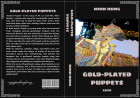

| Author(s) | Minh Hưng | ||
| Cover Type (if the book was published) | Soft Copy | ||
| Number of Pages | 259 | ||
| Date Published | 27/5/2026 |
| Permanent link to this publication: https://biblio.vn/m/book/view/JEWISH-HISTORY © biblio.vn |
|
Empty
|
New Books: |
Popular Books: |
Editor's Choice (Worldwide): |
 |
Editorial Contacts |
About · News · For Advertisers |
 Vietnam Digital Library ® All rights reserved. Vietnam Digital Library ® All rights reserved.
2023-2026, BIBLIO.VN is a part of Libmonster, international library network (open map) Keeping the heritage of Vietnam |


|

 US-Great Britain
 Sweden
 Serbia
 Russia
 Belarus
 Ukraine
 Kazakhstan
 Moldova
 Tajikistan
 Estonia
Russia-2
Belarus-2
Estonia
Russia-2
Belarus-2


